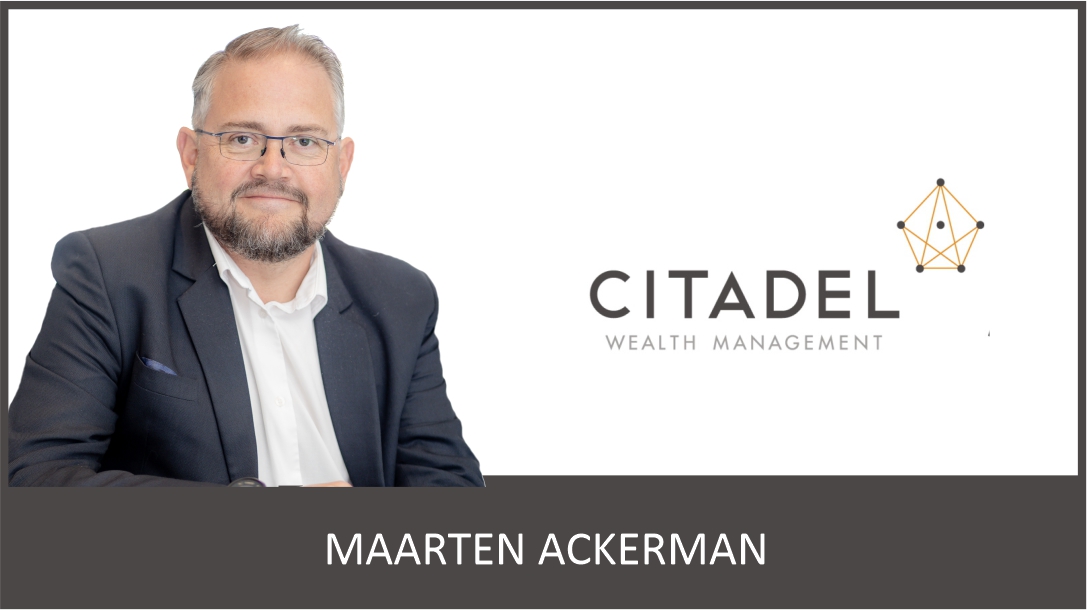
Maarten Ackerman, Chief Economist at Citadel
South Africa’s (SA) fourth‑quarter (Q4) gross domestic product (GDP) figures, released yesterday, show that the economy is expanding marginally better than market expectations and that there are positive growth signs for the economy in 2026, however, escalating conflict in the Middle East and its effects on global energy prices could dampen local growth, says Maarten Ackerman, Chief Economist at Citadel.
The economy expanded by 0.4% between the third and fourth quarters of 2025, instead of the predicted growth of 0.3%. This follows growth of 0.3% in the third quarter and a stronger 0.8% in the second quarter, bringing full‑year growth for 2025 to 1.1%.
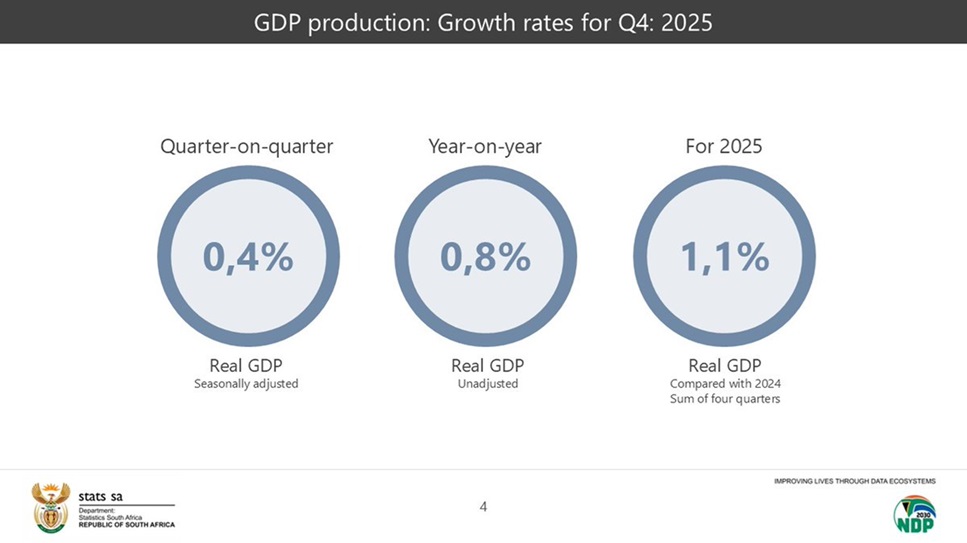
Figure 1: Source: Stats SA GDP figures for Q4 2025
“While this marks the strongest annual growth outcome in several years, it remains insufficient to meaningfully address SA’s deep‑seated structural challenges. Importantly, economic growth continues to lag population growth, meaning the country remains in a per‑capita recession,” Ackerman cautions.
Agriculture was the winner in 2025
The composition of SA’s recent growth tells an important story, he says. “The second and third quarters of 2025 painted a relatively positive picture, with a broader range of sectors contributing to activity. This more diversified growth profile is generally more sustainable over time. However, the fourth quarter once again highlighted key vulnerabilities, with mining, manufacturing, electricity and construction all contracting. These sectors are critical growth engines for the economy and are central to job creation, making their weakness particularly concerning.”
For the year, economic growth was driven primarily by agriculture, finance and real estate, with agriculture making the single largest contribution. Agricultural output increased by more than 17% in 2025, providing a significant boost to overall GDP. Financial services and real estate also contributed meaningfully. While encouraging, this again highlights the risk of an economy that is reliant on only two or three cylinders, reinforcing the need for broader industrial and productive capacity growth.
Consumer confidence remains resilient
Turning to the consumer, household spending delivered another strong quarter, rising 1.2% in the fourth quarter, following 0.9% growth in the third quarter and 1.3% in the second quarter. “These figures are encouraging and suggest that, despite ongoing economic pressures, consumers have remained resilient and continue to underpin economic activity through spending,” says Ackerman.
Business leads the way on infrastructure investment
“Another positive signal from today’s release was the continued improvement in gross fixed capital formation, which rose 1.3% in the fourth quarter, following a 1.4% increase in the third quarter,” says Ackerman. “This is an important development, as fixed investment by businesses, governments and households in assets such as machinery, buildings and infrastructure is always the first step in rebuilding economic capacity and laying the foundation for more sustainable long‑term growth. After the initial solar‑investment boom, fixed capital formation had struggled to make a positive contribution, making this recent improvement particularly welcome.”
Notably, R271 billion of fixed capital formation in the fourth quarter came from private business enterprises, accounting for 72% of total investment. The government contributed 18%, while public corporations made up the remaining 11%. “Business leading the way on this currently may be an early sign of crowding‑in of private sector investment, which will be essential for future growth.”
Export shrinks, despite commodities boom
“On the external front, exports contracted by 0.6% in the fourth quarter, despite strong exports of precious metals and gold. The decline was driven by weaker exports of vehicles and transport equipment, which may be an early indication of softer global demand, potentially linked to the impact of United States (US) tariff measures,” Ackerman says.
Soaring global energy prices could dampen growth
Ackerman concluded that SA’s 1.1% growth in 2025 represents an improvement on the past three years and offers some tentative evidence of emerging green shoots in the economy. He says it could be sustained if policy reform and implementation persisted, but the global environment remained highly uncertain, with the Iran conflict pushing the oil price above $100 per barrel.
“Prolonged higher global energy prices, combined with a weaker currency, will add to inflationary pressures and interest rate uncertainty in 2026. This poses a clear risk to SA’s growth outlook. In the current environment, further interest rate cuts by the South African Reserve Bank’s (SARB) Monetary Policy Committee (MPC) appear unlikely until there is greater clarity on the inflation outlook and the eventual resolution of tensions in the Middle East.”
ENDS