
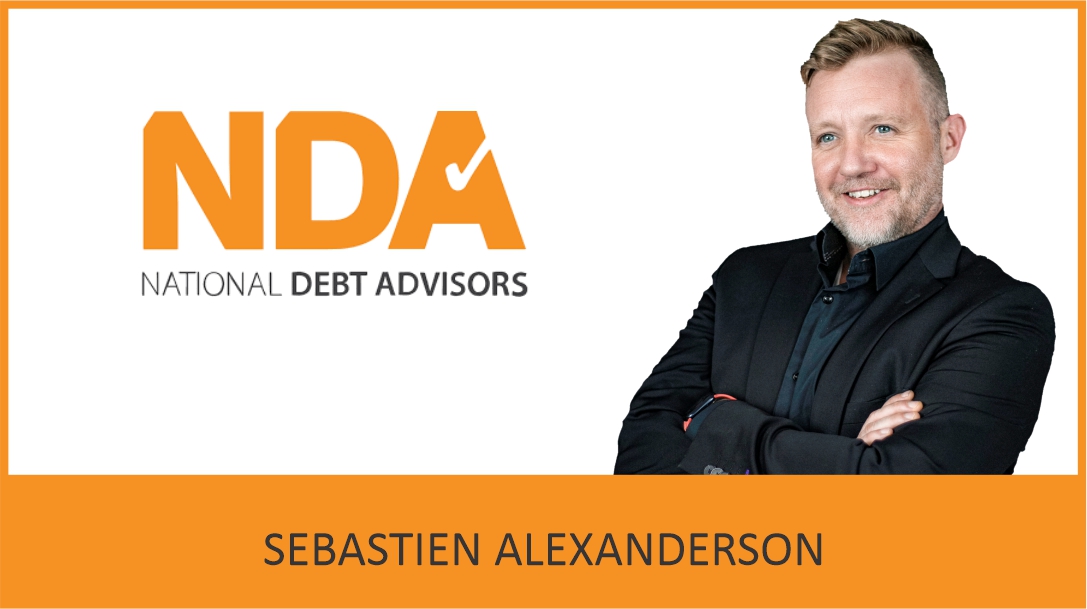
Sebastien Alexanderson, Head of National Debt Advisors
As of the 2025/26 financial year, debt levels among some South Africans have reached up to 28 times their monthly income, pointing to a widening gap between earnings and the cost of living.
This is according to the latest Consumer Report from National Debt Advisors, based on more than 70,000 consumers under debt review, which exposes just how severe the situation has become. The average consumer is carrying R91,126 in debt, while the median monthly income is just R9,536.
Consumers earning between R5,000 and R10,000 a month owe close to eight times their income. Those earning between R30,000 and R50,000 are carrying more than 28 times their income in debt.
Sebastien Alexanderson, Head of National Debt Advisors, says the numbers reflect a growing disconnect between income and the cost of living.
“South Africans are not living beyond their means anymore. Their means are simply not enough to live on. Debt has become the way people are closing that gap.”
He says the current economic environment is making it harder for that gap to close.
“Interest rate relief is not coming as quickly as many people hoped. With the repo rate still around 6.5% and prime close to 10%, borrowing remains expensive. That keeps pressure on anyone with a loan, a credit card, or a bond.”
Alexanderson says currency weakness is adding to the strain.
“The rand has been under pressure, and when that happens, the cost of living goes up. As petrol, food, and other essentials become more expensive, households feel it immediately. Even if inflation looks like it is easing, the reality on the ground is very different.”
He adds that slow economic growth is limiting any real income relief.
“We are sitting with growth of around 1% and unemployment close to 32%. That means incomes are not growing fast enough, and for many people, they are not growing at all. At the same time, there is pressure on government finances, which brings uncertainty around jobs and wages, especially in the public sector.”
Debt is mostly unsecured and increasingly risky
According to Alexanderson, the type of debt people are relying on is part of the problem.
“Almost all the debt we are seeing is unsecured. That means personal loans, credit cards, and store accounts. It is expensive credit, but it is also the most accessible.”
Among lower income earners, 96% of debt is unsecured. Very few consumers have assets to cover their debt: just 1.4% hold a home loan, and fewer than 5% have vehicle finance.
“That leaves people very exposed. There is no asset to fall back on, and when interest rates stay high, repayments can quickly become unmanageable.”
The pressure is hitting working South Africans
Alexanderson says this is not just affecting the most vulnerable.
“More than half of the people coming to us are between 31 and 45. These are working South Africans in their prime, but they are already overextended.”
Over-indebtedness exceeds 50% in lower income groups and remains above 40% even among higher earners.
“There is a perception that if you earn more, you are safer. What we are seeing is the opposite. Higher income gives you access to more credit, but in this environment, that also increases your risk.”
A structural problem, not a behavioural one
Alexanderson says the data points to a deeper issue in the economy.
“This is not about people making bad choices. It is a structural gap between income and the real cost of living.”
He says rising costs and easy access to credit are locking consumers into a cycle that is difficult to escape.
“Credit is filling the gap, but it is not solving the problem. With high interest rates, a weaker rand, and slow growth, that gap is not closing. It is getting bigger.”
For many South Africans, that reality has already set in.
“Debt is no longer something people use occasionally. For a lot of households, it has become part of how they survive every single month.”
ENDS